
When Sokratis Papastathopoulos left Arsenal in 2021。few fans outside Greece noted the exit. Yet for those who tracked his career, the departure marked the end of a particular kind of defending—one built on anticipation, raw physicality, and a stubborn refusal to yield. Papastathopoulos never chased headlines. He chased strikers. And for over a decade, he caught most of them. His journey from AEK Athens to Genoa, Milan, Dortmund, and North London reveals a player whose value lay not in flair but in the quiet, repeated act of stopping attacks before they matured.
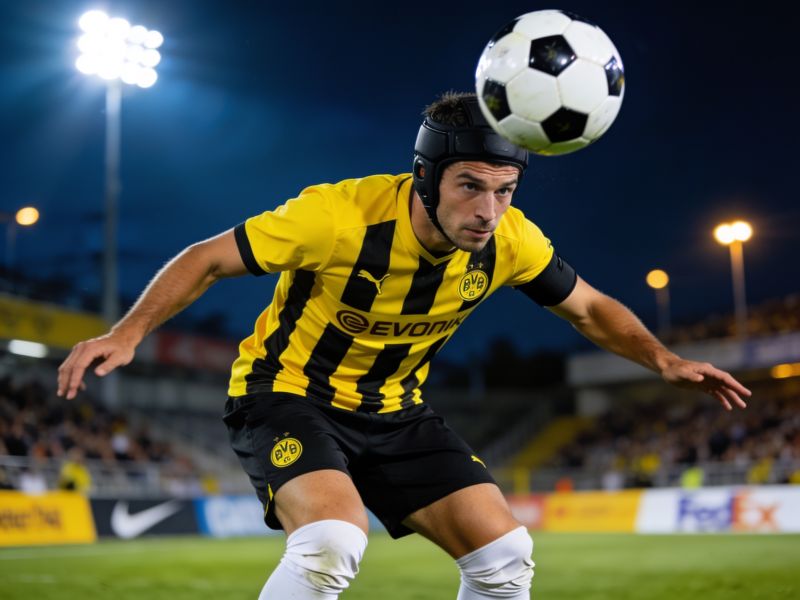
Born in Kalamata in 1988, Papastathopoulos rose through the AEK academy with a maturity that belied his age. A loan spell at Niki Volos sharpened his instincts;by 2008, he was a fixture in AEK's back line. The move to Genoa in 2010 introduced him to Serie A's tactical demands。where positioning matters more than pace. His performances there convinced AC Milan to sign him in 2011, though injuries limited his impact. The Milan chapter often gets dismissed as a footnote. I see it differently—those eighteen months taught Papastathopoulos how to read space in a league that punishes hesitation. When he joined Werder Bremen in 2012, the improvement was immediate. He wasn't just tackling;he was orchestrating.Borussia Dortmund is where Papastathopoulos became a cult figure. Between 2013 and 2018, he anchored a defense that reached the 2013 Champions League final (though he watched from the bench that day) and won two DFB-Pokals. His partnership with Mats Hummels and later Sven Bender relied on a simple division: Papastathopoulos handled the bruising duels。
the aerial clearances, the last-ditch blocks. Dortmund fans still recall his performance against Bayern Munich in the 2017 DFB-Pokal semi-final—a 3-2 win where he neutralized Robert Lewandowski for long stretches. That match encapsulated his ethos: no stepovers, no hollywood passes, just a relentless contest of body and will. Papastathopoulos accumulated yellow cards like others collect caps, but the bookings rarely came from recklessness. They came from calculated disruption.Arsenal signed him in 2018, hoping his experience would steady a leaky defense. It didn't quite work—Unai Emery's high line exposed his lack of recovery pace, and injuries disrupted rhythm. Still, Papastathopoulos left with dignity, never publicly complaining about reduced minutes. His subsequent spells at Olympiacos and Real Betis were quieter, but his influence in the Greek national team endured. With 90 caps。he retired as one of his country's most reliable defenders—a figure who turned up for qualifiers in far-flung venues without fuss. I watched him live once, in a World Cup qualifier against Belgium. He spent ninety minutes barking instructions at younger teammates, dragging them into position by sheer force of presence. The scoreline was forgettable;
his command was not.Papastathopoulos never won a major international trophy. He never played for a 'superclub' at its peak. Yet his career offers a lesson for how we evaluate defenders: consistency is invisible until it's absent. His game was about removing danger, not creating highlights. In an era that glorifies ball-playing centre-backs, he remained a specialist—a stopper who treated every cross like a personal insult. That approach doesn't generate viral clips. It generates clean sheets and the trust of managers who know exactly what they're getting. Papastathopoulos gave them that, season after season。without fanfare. Call it old-fashioned. Call it limited. But when the ball needed clearing, he was rarely far away.